Approach to Inflammatory Skin Diseases - Part 2
Description
Inflammatory skin diseases encompass a broad spectrum of conditions with overlapping histopathological features, making their diagnosis particularly challenging.
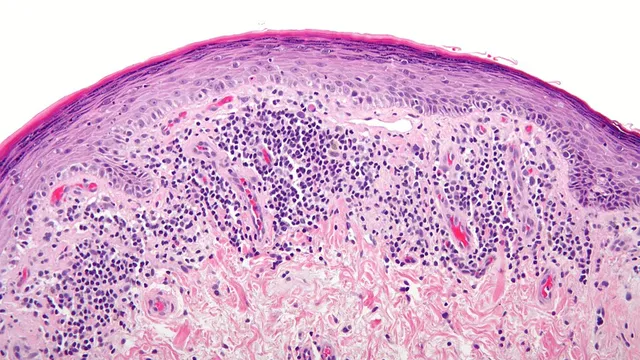
In this two-part webinar series, participants will be introduced to a systematic, pattern-based approach to inflammatory dermatopathology. The webinars will focus on the recognition and interpretation of major histopathological reaction patterns and their underlying immune modules.
Across the two webinars, participants will explore spongiotic/eczematous, psoriasiform, lichenoid, granulomatous and blistering reaction patterns, as well as panniculitis and vasculitis. For each pattern, the key histopathological features and relevant differential diagnoses will be discussed.
Particular emphasis will be placed on clinicopathological correlation, demonstrating how the integration of histopathological findings with clinical presentation and patient history can help narrow the differential diagnosis and support an accurate diagnosis.
The series provides practising pathologists with a practical, structured diagnostic framework to evaluate inflammatory skin biopsies with greater confidence.
Session Recordings
Recordings are available immediately after the live session, so you can recap key insights at your own pace. Enjoy ongoing access for as long as the webinar remains in our library. We continuously review our content to maintain high-quality training.
CME Accreditation
CME credits will be available once the webinar recording is published on our accredited platform, at 1 CME credit per hour. To claim credits, complete the assessment and submit the EACCME feedback form.
Learning Objectives
- Recognise the major histopathological reaction patterns associated with inflammatory skin diseases.
- Describe the key histopathological features of the reaction patterns covered during the series.
- Consider relevant differential diagnoses for major inflammatory reaction patterns.
- Explain the importance of clinicopathological correlation in inflammatory dermatopathology.
- Integrate histopathological findings with clinical presentation and patient history to help narrow the differential diagnosis.
- Use a systematic, pattern-based framework when evaluating inflammatory skin biopsies.
Lecturers