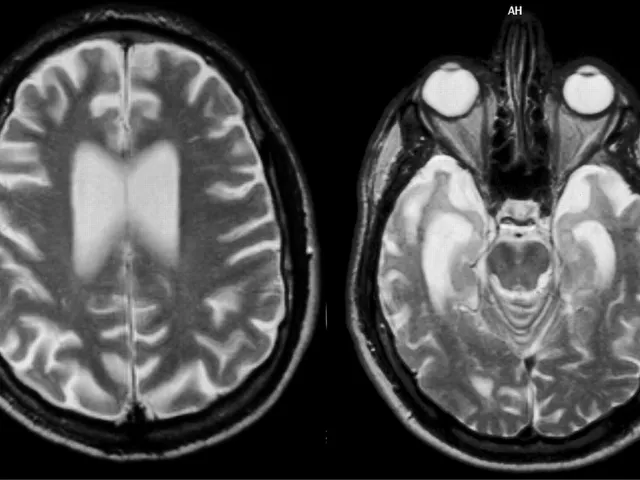
Dementia Imaging
Description
In this practical, case-based on-demand course, you will learn to read CT and MR of cognitive impairment patients in a standardised method.
You will be trained to use several visual scales such as the global cortical scale and medial temporal scale and assess frontal and parietal atrophy and vascular changes that can be involved in cognitive decline. You will also learn some differential diagnoses and other entities such as Alzheimer Disease (AD) and Frontotemporal Lobe Dementia (FTLD) that can cause dementia symptoms.
Dementia can be multifactorial, and although there are some types of dementia such as AD or FTLD that can show specific regional atrophy, it is common to find a combination of several factors such as cortical atrophy and vascular changes that can contribute to the cognitive decline. AD, FTLD and other types of dementia have diagnostic clinical criteria that include the CT and the MR findings, and it is essential to do an accurate report of dementia cases to help in the early clinical diagnosis of these patients.
The neuroimaging training contains 30 anonymised real-life cases, grouped into 6 modules, drawn from the mentor teaching files.
Note from the mentor:
I have chosen several cases for this training, some of them are done with a specific protocol for dementia but others are acquired as standard head MR or CT with some sequences such as SWI or a plane such as coronal unavailable. The reason for that is that most centres do not use a specific MR protocol for dementia or others use CT. I would like you to learn how to report using these clinical cases in a realistic environment similar to that found in clinical practice.
Unilabs Academy e-learning
The course is delivered using a Reporting Simulator — a unique, interactive tool integrated in our e-learning platform designed for radiologists to mirror real-life clinical practice. The Simulator includes a DICOM image viewer and a dynamic, structured reporting form. Upon report submission, you receive immediate, case-specific feedback, allowing you to identify gaps and refine your reporting skills.
You can start for free and complete the first 5 cases at no cost. Full access to all 30 cases and other courses and webinars can be unlocked by purchasing a Premium Membership.
📅 Join also our "Imaging of Neurodegenerative Diseases: Dementia and Movement Disorders" 3-day online fellowship with Dr Sven Haller in Oct 2026! Live lectures, case reading, and plenty of Q&A in an interactive format.
Check the agenda and schedule here
Learning Objectives
- To know different causes of dementia: vascular dementia, neurodegenerative dementia (AD, FTLD), Chronic hydrocephalus, Prion diseases, and the most common radiological findings.
- To learn how to examine and read CT and MR studies in patients with cognitive decline or suspected dementia.
- To introduce the concept of STANDARDISED REPORTING and learn how to apply it to the interpretation of CT and MR studies in patients with dementia
Level
Radiology Simulator - How does it work?
The specialised radiologist mentors have carefully prepared a structured reporting template to help you report the MRI cases, formatted in a quiz format while you also view the cases in a web-based PACS-viewer on the right.
1. First, you should review the case images.
2. Then, you can begin the reporting template quiz (meanwhile still reviewing the images on the right)
3. After you submit your answers, the correct answers will appear and you will receive a score for your report.
4. Alongside the answers, you will also find helpful comments and learnings that the specialised radiologist mentor has left. There might also be arrows or markings on the images to help you see relevant findings.
5. If you score more than 66%, you have passed the module and can download your CME Certificate. You can reset the module and try again if you did not pass.
You can save the module whenever you want and return to it later, giving you the flexibility to practice on your own time.
📽 If this is your first Radiology Simulator reporting course, don't miss the introductory video to the right!
🗨
Check our FAQ page you can also email us directly with your questions.
Technical Requirements
| Hardware | Tablets * | Minimum | Recommended |
|---|---|---|---|
| Memory (RAM): | 2 Gigabyte | 8 Gigabyte | 16 Gigabyte |
| Processor (CPU): | Dual core 1.85 Ghz | Dual core 2 Ghz | Quad core 2.5 Ghz |
| Internet connection | Minimum | Recommended | |
| Speed: | 10 Mbps | 25 Mbps | |
| Software | Tablets | Desktop | |
| Browser: | Safari * | Chrome ** | |
- * Tested with Safari on iPad 9.7 (2017), should also work on Android with Chrome. User interface not optimized for smaller screens. Large cases (more than 600 images) are not able to be opened on tablet or mobile devices due to memory consTableRowaints.
- ** Firefox, Edge and Safari also work but might not provide an equally smooth experience. Internet Explorer is not supported.
Introduction Video
Lecturers