 This training is accredited by EACCME with 10 CME credits
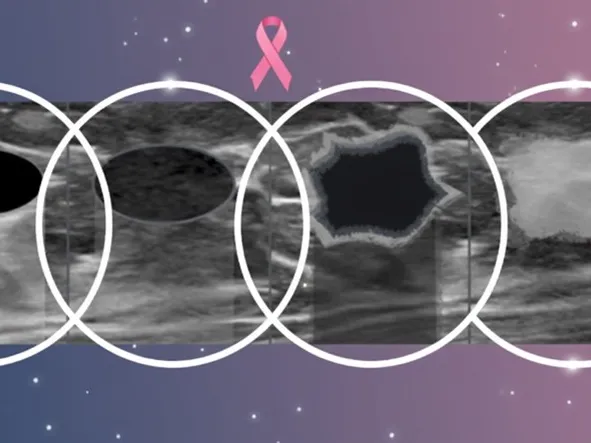
 This virtual fellowship combines short lectures, case reviews, and interactive discussions in a dynamic online classroom. Participants will gain skills to perform and interpret breast and axillary ultrasound, apply BI-RADS classification, and understand the principles of diagnostic and interventional ultrasound. Advanced methods such as elastography, AI, and contrast-enhanced ultrasound will be introduced.
Held in small virtual groups with open discussion and feedback, the course recreates the atmosphere of an in-person workshop where participants can ask questions freely and learn collaboratively.
By the end of the course, you will:
- Optimise scanning technique for different breast types and clinical scenarios
- Gain the skills to perform systematic breast and axillary ultrasound with accuracy and confidence
- Apply BI-RADS lexicon and structured reporting to communicate findings clearly
- Recognise benign, suspicious, and malignant patterns, including subtle and atypical presentations
- Manage male, young, post-surgical, and infection-related cases with clarity
- Understand ultrasound-guided procedures from biopsy and aspiration to percutaneous treatment
- Explore advanced tools such as elastography, contrast-enhanced ultrasound, and AI applications
- Integrate ultrasound findings into triple-assessment and multidisciplinary workflows
“Breast ultrasound is easy to access but difficult to master. My goal is to help you build the expertise to see more, miss less, and make confident, patient-centred decisions.” Dr Elisabetta Giannotti
- Dates
- 6 - 8 Jul 2026
- Agenda time
- 13:30 - 17:30 (GMT+2)
- Perform high-quality breast and axillary ultrasound examinations
- Recognise normal anatomy and differentiate benign from malignant lesions
- Apply BI-RADS for structured and consistent reporting
- Identify and manage acute, inflammatory, and post-surgical conditions
- Understand the principles of ultrasound-guided procedures
- Recognise pitfalls to improve diagnostic confidence
- Apply a structured, patient-centred approach within multidisciplinary care
- Short lectures on scanning technique, lesion analysis, and structured reporting
- Practical guidance on image optimisation
- Case-based reviews of benign, malignant, and post-treatment appearances
- Discussion of acute presentations such as mastitis and abscess
- Overview of ultrasound-guided interventions and localisation
- Introduction to Doppler, AI, elastography, and contrast-enhanced ultrasound
- Interactive group discussions with direct feedback and practical tips
- Toolkit of learning materials including reference slides, protocols, and BI-RADS resources
This virtual fellowship is open to all healthcare and allied health professionals seeking structured, practical ultrasound training and wishing to strengthen their skills and confidence in breast ultrasound. It is particularly relevant to radiologists, radiology trainees, general practitioners, gynaecologists, sonographers, and breast care practitioners involved in breast care, but participation is not limited to these groups.
Covering topics from basic scanning principles to more advanced diagnostic and interventional techniques, the programme provides a comprehensive and accessible overview of breast ultrasound. Through interactive case discussions, image interpretation, and expert feedback, participants will gain practical knowledge directly applicable to everyday clinical practice.
This radiology course is organised by Unilabs Academy, an EACCME Trusted Provider.
| Hardware | Tablets * | Minimum | Recommended |
|---|---|---|---|
| Memory (RAM): | 2 Gigabyte | 8 Gigabyte | 16 Gigabyte |
| Processor (CPU): | Dual core 1.85 Ghz | Dual core 2 Ghz | Quad core 2.5 Ghz |
| Internet connection | Minimum | Recommended | |
| Speed: | 10 Mbps | 25 Mbps | |
| Software | Tablets | Desktop | |
| Browser: | Safari * | Chrome ** | |
- * Tested with Safari on iPad 9.7 (2017), should also work on Android with Chrome. User interface not optimized for smaller screens. Large cases (more than 600 images) are not able to be opened on tablet or mobile devices due to memory consTableRowaints.
- ** Firefox, Edge and Safari also work but might not provide an equally smooth experience. Internet Explorer is not supported.