Pelvic Floor Imaging Fellowship
 This training is accredited by EACCME with 12 CME credits
 Description
Pelvic Floor Dysfunction is a complex set of conditions. Imaging can help identify and quantify the multicompartment involvement that may not always be apparent on physical examination.
Imaging techniques vary considerably between centres, and there is a need for more standardized utilization, interpretation, and reporting of imaging for the pelvic floor as per recently published recommendations from ESUR and ESGAR Pelvic Floor Working Group*
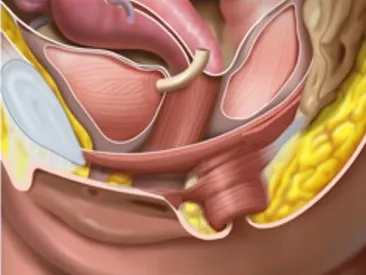
Upon completing this fellowship, participants will develop, implement, and adequately report pelvic floor imaging protocols tailored to the specific needs of their referring physicians and patients. The lectures will systematically demonstrate the various types of pelvic floor dysfunction via a combination of schematics, real-time cine-loops of dynamic and static images, as well as complete cases for review by the participants.
Each module starts with a lecture. After the lecture, you will be challenged to practise on real anonymised key cases. After and during the individual case readings there will be plenty of time for group discussion and Q&A with the mentor.
Unilabs Academy online radiology courses with certificates are held in a virtual classroom on Zoom. Participants are encouraged to engage in discussions using their camera and microphone to recreate the face-to-face experience. Online sessions are recorded so that participants can review on their own time following the training. In this small group environment among your peers, you are free to ask questions, make mistakes, and learn together with the support of the radiologist mentor.
*Reference: El Sayed RF, Alt CD, Maccioni F, et al. Magnetic Resonance imaging of pelvic floor dysfunction – joint recommendations of the ESUR and ESGAR Pelvic Floor Working Group. Eur Radiol. 2017;27(5):2067-2085
Testimonials:
“Rania is an exceptionally enthusiastic and dedicated lecturer who, in just three days, helped me gain strong confidence in MRI defaecography and significantly elevate my reporting skills to a clinically relevant level.”
Dr. Demosthenis (Fellow, January 2026)
“I’ve used Unilabs for years and am always impressed by the quality of teaching and content. Highly recommend, especially Professor Rania’s pelvic floor fellowship.”
Dr. Rehmani Jawad (Fellow, January 2026)
Schedule at a glance
- Dates
- 6 - 8 Jul 2026
- Agenda time
- 13:30 - 18:00
- Timezone
- Europe/Stockholm (GMT+2)
Learning Objectives
- Learn comprehensive MR technique for evaluation of the pelvic floor including appropriate sequences, utility of rectal contrast and defecation phase, appropriate technologist education, and patient coaching
- Review anatomy of the pelvic floor including levator anatomy, and landmarks used in functional evaluation
- Learn functional imaging of the pelvic floor including appropriate measurement and grading of prolapse in the anterior, middle, and posterior compartments as well as assessment of anorectal and defecatory dysfunction
- Learn appropriate reporting of MR defecography – what the referring physicians want to know
Programme will include
- Various lectures
- Individual case reading and interpretation on provided cases
- Group case discussion of the selected cases
- Plenty of time for Q&A with the radiologist mentor
- Access to presentation slides, session recordings, and other course materials
- Access to discussed cases prior to and after the fellowship
- Your own personal dashboard and course materials on the Unilabs Academy online platform
- Direct mentor access beyond the fellowship through an international pelvic floor imaging social media group, enabling ongoing interaction with Prof. Rania Farouk El Sayed.
- CME Certificate
Level
Although the course is geared toward general radiologists, all radiologists may attend and benefit from this training which will start with the basic essential anatomical and technical information and will upgrade the information to expert level
Discounts for Radiology Education
Active Premium Membership automatically gives you €100 off every fellowship.
Unilabs Academy is happy to offer group or resident-specific, flexible payment options to support radiology education within hospitals or practices. Please email us at academy.radiology@unilabs.com for special discount details.
Technical Requirements
| Hardware | Tablets * | Minimum | Recommended |
|---|---|---|---|
| Memory (RAM): | 2 Gigabyte | 8 Gigabyte | 16 Gigabyte |
| Processor (CPU): | Dual core 1.85 Ghz | Dual core 2 Ghz | Quad core 2.5 Ghz |
| Internet connection | Minimum | Recommended | |
| Speed: | 10 Mbps | 25 Mbps | |
| Software | Tablets | Desktop | |
| Browser: | Safari * | Chrome ** | |
- * Tested with Safari on iPad 9.7 (2017), should also work on Android with Chrome. User interface not optimized for smaller screens. Large cases (more than 600 images) are not able to be opened on tablet or mobile devices due to memory consTableRowaints.
- ** Firefox, Edge and Safari also work but might not provide an equally smooth experience. Internet Explorer is not supported.
Lecturers