On-demand Webinar
·
1 CME Credit
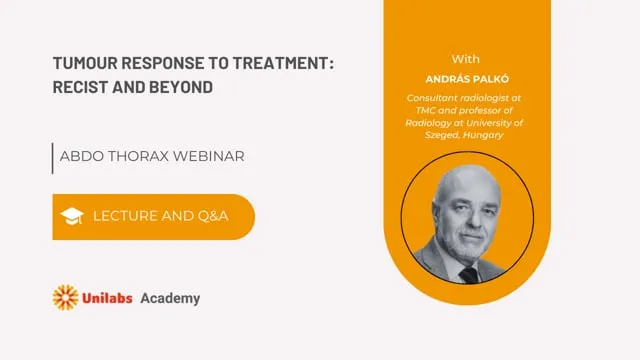
Tumour response to treatment: RECIST and beyond
RECIST 1.1 and alternative criteria provide an objective framework for imaging assessment of tumour response to modern therapies.
Already have an account?
Description
Response assessment is traced from WHO criteria to RECIST 1.1, including baseline, nadir, measurable disease, target lesions, and response categories. Limitations in anti-angiogenic and immune therapies, pseudoprogression, modified criteria, iRECIST, and potential roles for advanced imaging are examined.
Learning Objectives
- Apply RECIST 1.1 definitions for measurable disease, target lesions, baseline, and nadir.
- Categorise treatment response and recognise limitations of size-based assessment.
- Explain when modified or immune-response criteria and advanced imaging may be appropriate.
- Recognise pseudoprogression and atypical response patterns associated with anti-angiogenic and immune therapies.
Topics Covered
To jump to a specific chapter, click on the chapter title once the video is playing.
00:17 - Introduction to Tumor Evaluation by Imaging
00:48 - Objective Tumor Evaluation Importance
01:58 - WHO Criteria for Tumor Evaluation
04:52 - Introduction of RACIST Criteria
06:28 - RACIST 1.1 and Modified RACIST
07:37 - Defining Baseline and Nadir Sizes
09:46 - Measurable vs. Non-measurable Lesions
12:28 - Target Lesions in RACIST Criteria
17:02 - Evaluating Therapeutic Response
25:10 - Limitations of RACIST Criteria
30:45 - Anti-Angiogenic Treatments and Pseudo-Progression
36:32 - Alternative Response Evaluation Criteria
40:06 - Immune RACIST Evaluation System
47:00 - When to Use iRACIST
51:08 - Advanced Imaging and Future Prospects
Lecturers
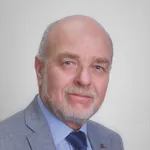
András PalkóM.D. Ph.D.
Szeged, Hungary
Consultant radiologist at TMC and professor of Radiology at University of Szeged, Hungary
Professor András Palkó, M.D, Ph. D. has extensive clinical as well as academic experience. Dr. Palkó has been working with abdominal CT and MRI for 25 years. He is the author of 90 peer reviewed papers and over 40 books and book chapters, invited speaker of international scientific and educational conferences, co-founder and faculty member of the European School of Radiology and examiner for the European Diploma in Radiology